


Building an e-commerce brand requires far more than launching a basic online shop and running social media ads. While anyone can set up a storefront in an afternoon, creating a sustainable, scalable business demands strategy, audience alignment, precise positioning, robust technology, and consistent execution.
This guide details the end-to-end blueprint for building a distinct, profitable e-commerce brand from zero—from market validation and brand strategy to store development, customer acquisition, and long-term retention.
Featured Snippet: How to Build an E-commerce Brand in 8 Core Steps
To build a successful e-commerce brand from scratch:
- Identify a profitable niche with proven demand and healthy profit margins.
- Define your target audience through detailed buyer personas and customer research.
- Establish unique brand positioning and a compelling value proposition.
- Develop visual identity and voice, including a memorable name, logo, typography, packaging, and messaging.
- Build a high-converting store using scalable infrastructure like Shopify, WooCommerce, or custom platforms.
- Execute an omnichannel marketing strategy spanning SEO, content marketing, paid media, and social proof.
- Optimize for customer retention with automated email marketing, post-purchase sequences, and loyalty initiatives.
- Scale operations through product line expansion, international shipping, and process automation.
What Is an E-commerce Brand?
Understanding the distinction between selling products online and building a recognized brand is fundamental to long-term profitability.
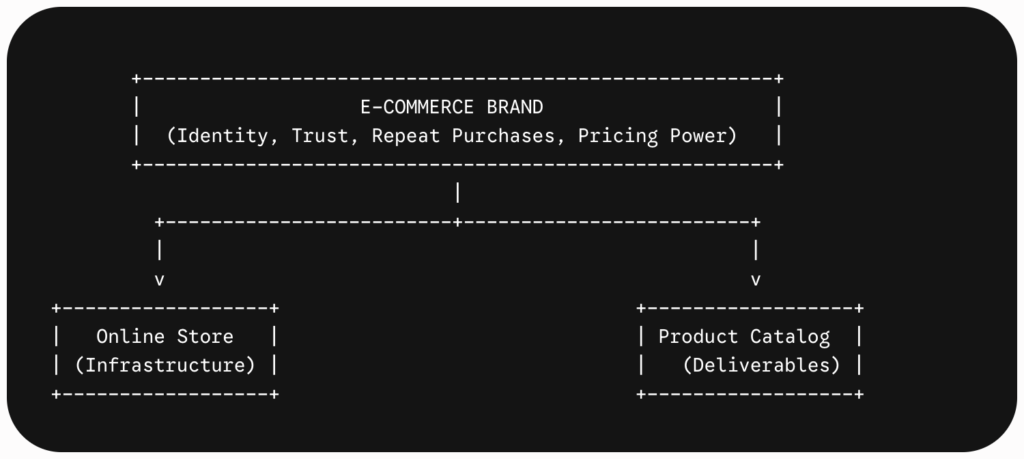
| Entity | Definition | Primary Focus | Customer Relationship |
| Product | A physical or digital item sold to meet a specific immediate need. | Functionality & Utility | Transactional |
| Online Store | The digital storefront or technology platform (e.g., Shopify, WooCommerce) where transactions occur. | Usability & Checkout Efficiency | Tactical |
| E-commerce Business | The legal and operational setup managing inventory, logistics, revenue, and customer service. | Profitability & Cash Flow | Operational |
| Direct-to-Consumer (DTC) Brand | A business model where a brand manufactures and sells its products directly to end consumers, bypassing traditional wholesale intermediaries. | Margin Control & Direct Data Access | Direct Relationship |
| E-commerce Brand | The emotional and cognitive perception of a business formed by market positioning, visual identity, customer service, and core values. | Loyalty, Advocacy & Perceived Value | Relational & Emotional |
Customers buy products out of necessity, but they return to brands because of trust, identity alignment, and consistent quality. A strong e-commerce brand commands higher price points, drives customer lifetime value (CLV), and drastically reduces customer acquisition costs (CAC) over time.
2. Is Building an E-commerce Brand Worth It?
The digital retail landscape presents immense opportunities alongside heightened competitive challenges. Evaluating these factors ensures realistic planning before capital deployment.
Market Opportunities
- Global Market Expansion: Digital distribution allows brands to access international audiences without maintaining physical retail footprints.
- Direct Customer Relationships: Operating direct-to-consumer provides first-party data ownership, enabling customized marketing and direct communication channels.
- Structural Scalability: Cloud-based store architectures and modern logistics networks allow lean teams to handle rapid revenue growth.
Operational Realities
- Rising Acquisition Costs: Reliance on paid social media advertising has increased operational CAC, making organic channels (SEO, email, retention) vital.
- Low Entry Barriers: Low entry barriers increase category saturation, making clear brand differentiation mandatory.
- Logistical Expectations: Modern consumers expect fast, low-cost shipping and hassle-free returns.
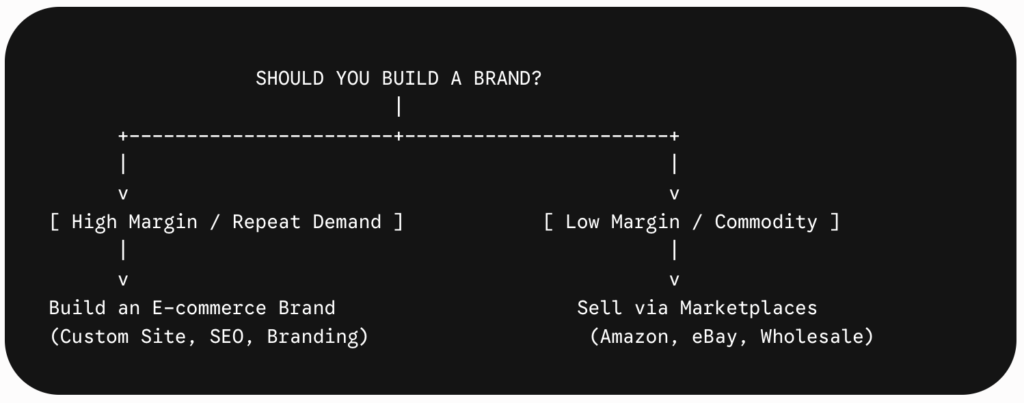
Strategic Rule: If a product is a pure commodity with no margin flexibility, no differentiation potential, and a low repeat-purchase rate, it is better suited for marketplace distribution (e.g., Amazon, eBay) rather than a standalone D2C e-commerce brand.
3. Step 1: Choose the Right Niche
Selecting an e-commerce niche requires balancing personal expertise, commercial demand, and structural unit economics.
Key Criteria for Evaluating a Niche
- Market Demand & Search Volume: Validate that steady or growing search volume exists for core product solutions using tools like Google Trends and keyword research software.
- Profit Margins: Aim for gross profit margins of 60% to 80% (a 3x to 5x markup on Cost of Goods Sold) to absorb advertising, shipping, and operational expenses.
- Repeat Purchase Potential: Products that naturally deplete (e.g., skincare, coffee, pet food, supplements) lower long-term acquisition costs via recurring customer orders.
- Differentiation Capability: Ensure the category allows for custom formulations, unique material choices, proprietary designs, or superior brand messaging.
- Shipping & Handling Dynamics: Lightweight, durable products minimize fulfillment costs, transit damage, and customer service friction.
- Regulatory Landscape: Be aware of certification requirements, import compliance, or restrictions on channels like Google or Meta (e.g., CBD, medical devices).
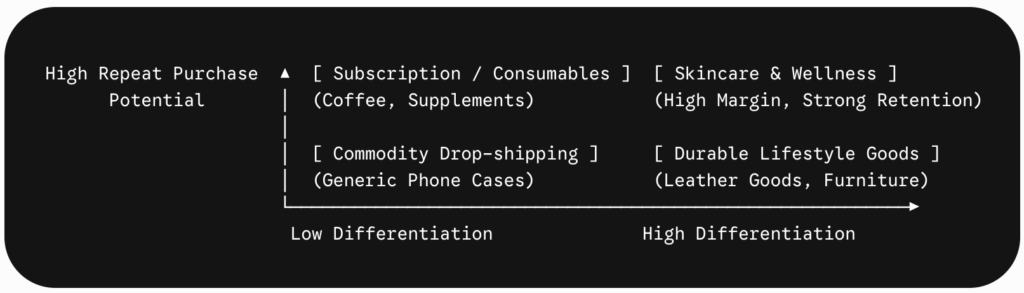
High-Potential E-commerce Niche Examples
- Skincare & Personal Care: Clean beauty, specialized dermatology, eco-conscious grooming.
- Pet Care & Accessories: Organic pet nutrition, ergonomic harnesses, functional pet gear.
- Fitness & Activewear: Technical apparel, home recovery equipment, specialized training accessories.
- Home & Lifestyle: Sustainable kitchenware, ergonomic workspace tools, custom decor.
- Specialty Food & Beverage: Functional beverages, direct-trade coffees, artisanal dietary products.
4. Step 2: Research Your Target Audience
Understanding your prospective buyer prevents wasted ad spend and ineffective website messaging. Broad targeting weakens brand relevance; niche targeting improves conversion rates.
Audience Research Framework
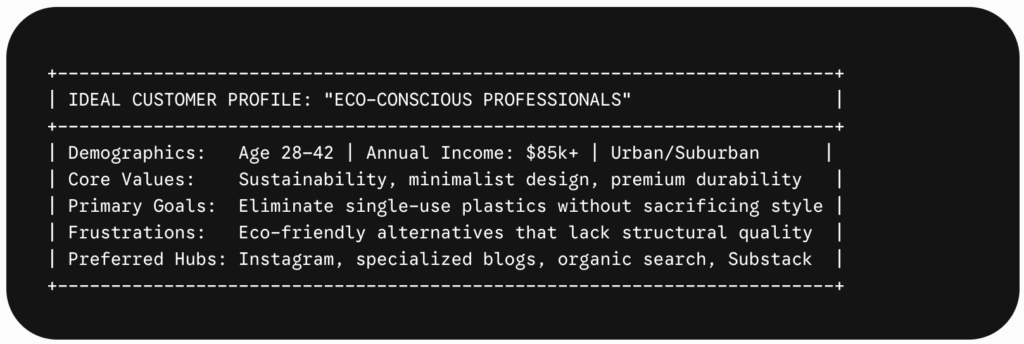
- Demographics: Age, gender identity, geographic location, household income, education level, occupation.
- Psychographics: Core values, personal aspirations, lifestyle preferences, socio-cultural affiliations.
- Pain Points & Frustrations: Current product shortcomings, bad past experiences, unresolved daily challenges.
- Buying Motivations: Desire for convenience, status, health improvement, cost efficiency, or ethical consumption.
Sample Ideal Customer Profile (ICP)
Step 3: Validate Your Product Idea
Before placing bulk inventory orders or launching custom manufacturing, validate demand to protect startup capital.
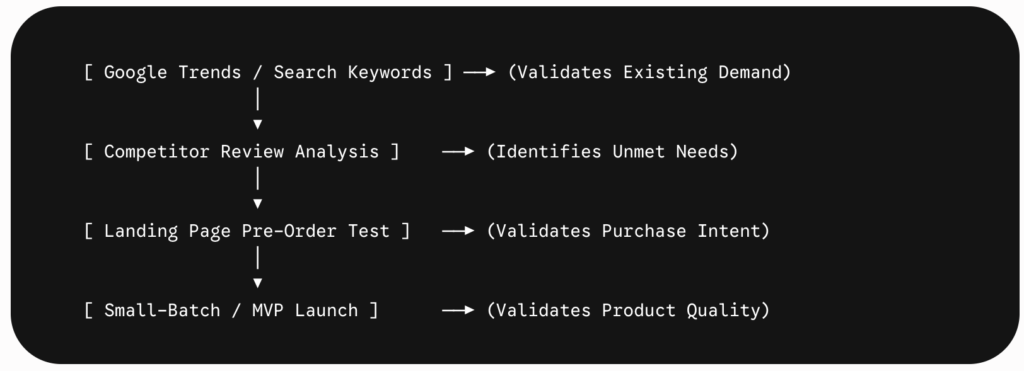
Validation Methodologies
- Keyword Volume & Search Intent Analysis: Use search engine data to verify that consumers actively search for solutions in your prospective niche.
- Marketplace Review Mining: Analyze 2-star and 3-star reviews on Amazon or competitor stores in your category. Identify recurring customer complaints regarding durability, packaging, sizing, or customer support.
- Landing Page Pre-Order Test: Build a clean, high-converting landing page explaining your product’s unique value proposition. Run targeted ad campaigns to test conversion rates on waitlist signups or deposit pre-orders.
- Minimum Viable Product (MVP) Launch: Produce a small, limited production run (50–200 units) to test product performance, unboxing presentation, shipping times, and real customer feedback.
6. Step 4: Research Your Competitors
Competitor analysis is not about copying existing market players; it is about uncovering market gaps and establishing distinct visual and messaging differentiation.
Competitor Audit Matrix
| Research Axis | Strategic Variables to Audit | Differentiation Opportunity |
| Product & Offer | Materials, manufacturing origin, pricing tiers, bundle options, warranty terms. | Offer better materials, improved warranties, or multi-item bundles. |
| Digital Experience | Platform performance, mobile usability, page load speeds, checkout friction, visual hierarchy. | Build a faster, more intuitive store experience. |
| Brand Identity | Color palettes, tone of voice, visual aesthetics, packaging touchpoints. | Stand out visually from category norms (e.g., vibrant design in a beige market). |
| Marketing Channels | Top organic keywords, ad channels (Meta, TikTok, Google), content formats, review strategies. | Win market share on overlooked channels or target long-tail search queries. |
Step 5: Define Your Brand Positioning
Positioning defines where your brand sits in the mind of the consumer relative to competing options. Effective positioning answers one core question: Why should a buyer choose your brand over established alternatives?
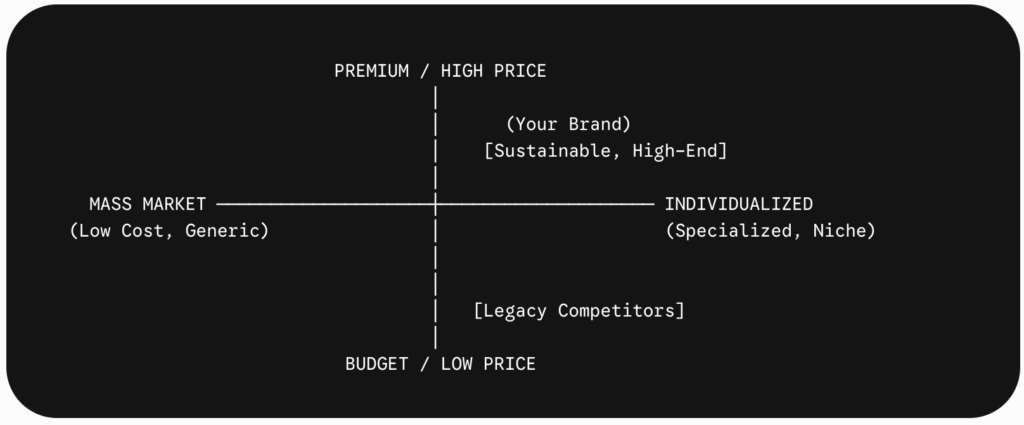
Brand Positioning Formula
For [Target Audience] who [Statement of Need], [Brand Name] is the [Product Category] that [Core Value Proposition], unlike [Primary Competitor], because [Reason to Believe].
Example Application: Home Coffee Brand
- Generic Positioning: “We sell organic dark roast coffee beans online.”
- Differentiated Positioning: “For remote workers seeking cafe-quality focus at home, Aura Coffee is the mold-free, single-origin shade-grown coffee that eliminates energy crashes without bitter aftertaste, backed by independent lab test verification.”
8. Step 6: Choose a Brand Name
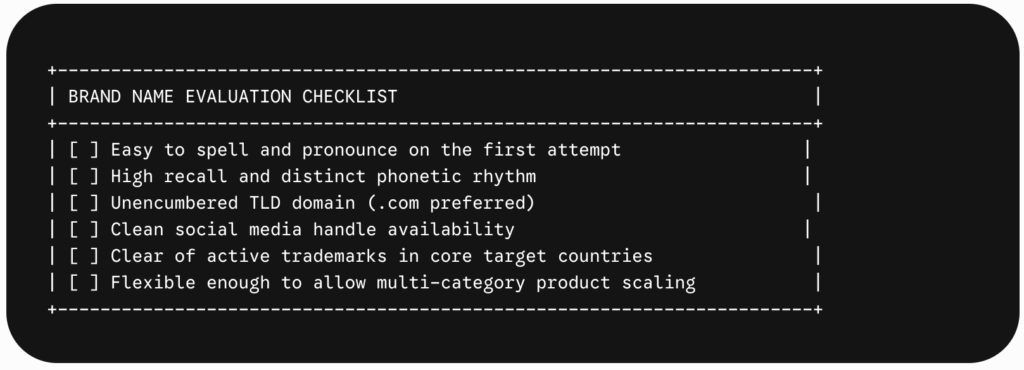
A strong brand name is memorable, simple to pronounce, scalable across future product expansions, and legally defensible.
Name Evaluation Criteria
- Pronunciation & Clarity: Avoid complex spellings that hinder word-of-mouth referral.
- Domain & Digital Availability: Verify availability for standard domain TLDs (e.g.,
.com) and matching social media handles across core platforms. - Scalability: Avoid narrow product names that prevent expanding your catalog later (e.g., The Leather Belt Co. limits expansion into footwear or bags).
- Trademark Compliance: Conduct exhaustive search checks via global intellectual property databases (such as USPTO, WIPO, or local registries) to avoid legal conflicts.
9. Step 7: Create Your Brand Identity
Brand identity represents the visual architecture of your company. Consistency across visual touchpoints builds recognition and establishes consumer confidence.
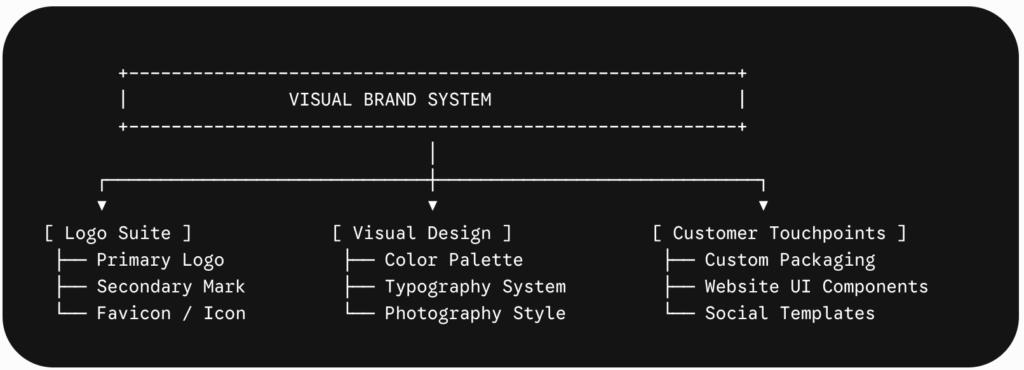
Core Components of a Visual Identity
- Logo Architecture: Build a versatile suite including a primary logo, secondary brand mark, submark, and digital favicon suitable for various aspect ratios.
- Color Palette System: Establish a primary brand color, secondary supporting shades, a high-contrast call-to-action (CTA) tone, and neutral background tones.
- Typography Hierarchy: Define primary header fonts, readable secondary body fonts, and dedicated accents for banners or callout boxes.
- Product Photography Guidelines: Set clear standards for clean studio product photos (white/neutral background), lifestyle context imagery, detail macro shots, and scale-demonstration imagery.
- Packaging & Unboxing System: Design outer boxes, custom shipping tape, branded tissue paper, product insert cards, and scannable QR codes for post-purchase digital engagement.
10. Step 8: Develop Your Brand Voice and Story
Your brand voice dictates how your business sounds across website copy, marketing emails, customer service interactions, and ad creatives.
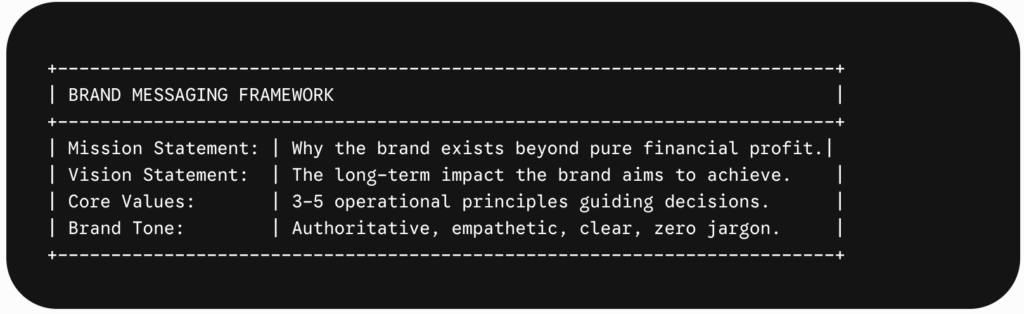
The Founders’ Brand Story Model
- The Origin Event: The initial problem, frustration, or market gap that inspired the product.
- The Development Journey: The hurdles, testing phases, and material standards used to build a better alternative.
- The Mission Solution: The final product launch and commitment to serving the target community.
11. Step 9: Select Your Products and Pricing Strategy
Catalog design and financial engineering determine gross margin health and long-term business viability.
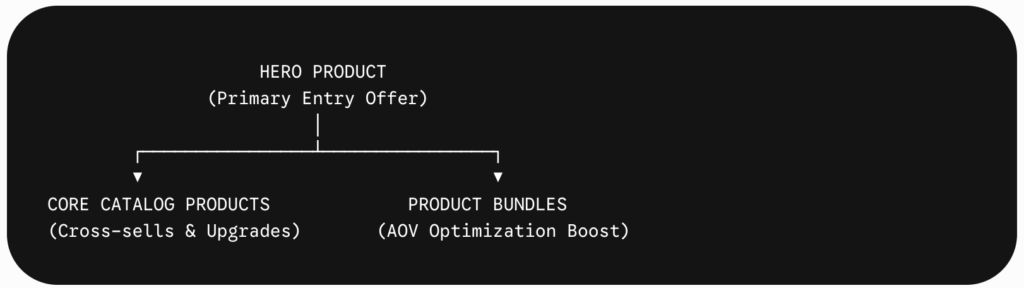
Catalog Architecture
- Hero Product: The flagship offer designed for primary customer acquisition, representing your best value proposition.
- Core Catalog: Supporting items designed for cross-selling and ecosystem completion.
- Bundles & Tiered Offers: Structured multi-packs designed to maximize Average Order Value (AOV).
Pricing Methodologies & Margin Structure
- Cost-Plus Pricing Strategy: Calculate base manufacturing, shipping, and packaging costs, then apply a fixed markup percentage.
- Value-Based Pricing Strategy: Price products based on perceived market value and problem severity rather than production cost alone.
- Threshold-Based Free Shipping: Set free shipping qualification thresholds 15% to 20% above your current Average Order Value (AOV) to encourage cart building.
12. Step 10: Create Professional Product Packaging
Packaging is the first physical interaction a buyer has with your e-commerce brand. High-quality unboxing experiences improve customer satisfaction and drive organic user-generated content (UGC).
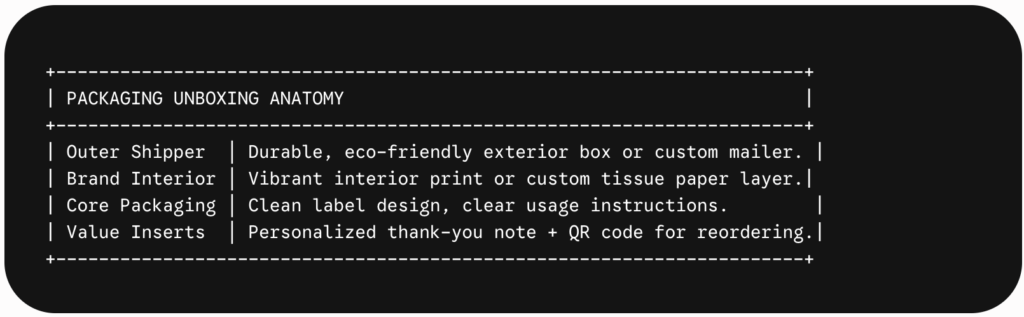
Benefits of Custom Packaging
- Drives Social Proof: Visually appealing unboxing experiences encourage unboxing videos and organic posts on social platforms like Instagram and TikTok.
- Increases Perceived Value: Premium materials justify higher retail prices and set your products apart from white-label alternatives.
- Improves Reorder Rates: Product inserts featuring QR codes make reordering fast and convenient, boosting customer retention.
13. Step 11: Build Your E-commerce Website
Your store is your digital headquarters. The user experience (UX) must minimize conversion friction while reflecting your brand identity.
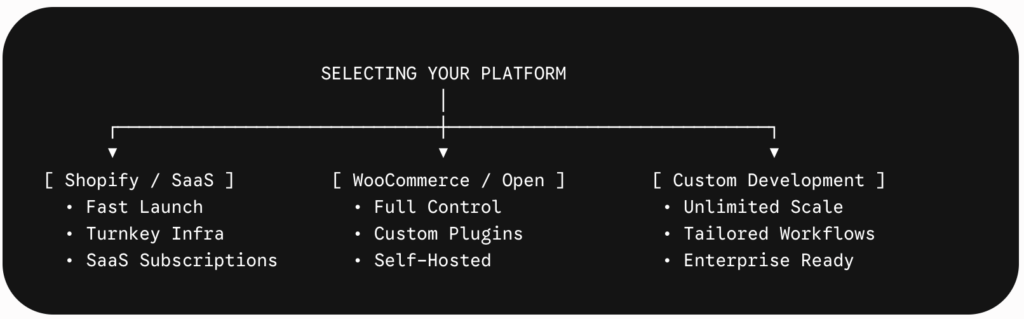
| Platform | Best Suited For | Key Advantages | Potential Trade-offs |
| Shopify | Early-stage to high-growth DTC brands | Rapid deployment, robust app ecosystem, hosted checkout, secure PCI compliance. | Monthly SaaS costs, transaction fees if not using native payment rails. |
| WooCommerce | Businesses seeking open-source customization | Full database control, zero platform usage fees, extensive WordPress plugin ecosystem. | Requires self-hosted maintenance, manual security updates, and performance optimization. |
| Custom Platform | Mid-market to enterprise brands with complex logic | Bespoke customer journeys, tailored ERP/CRM integrations, high speed, scalable architecture. | Higher upfront development investment and dedicated technical oversight. |
Businesses seeking tailored architecture, bespoke functionality, or scalable platform setups often partner with established development agencies. For instance, DigitoX provides specialized e-commerce website development services, assisting brands in selecting, building, and launching high-converting stores tailored to their specific needs.
14. Step 12: Create High-Converting Product Pages
A product page must address consumer doubts, demonstrate value, and clearly guide the visitor toward conversion.
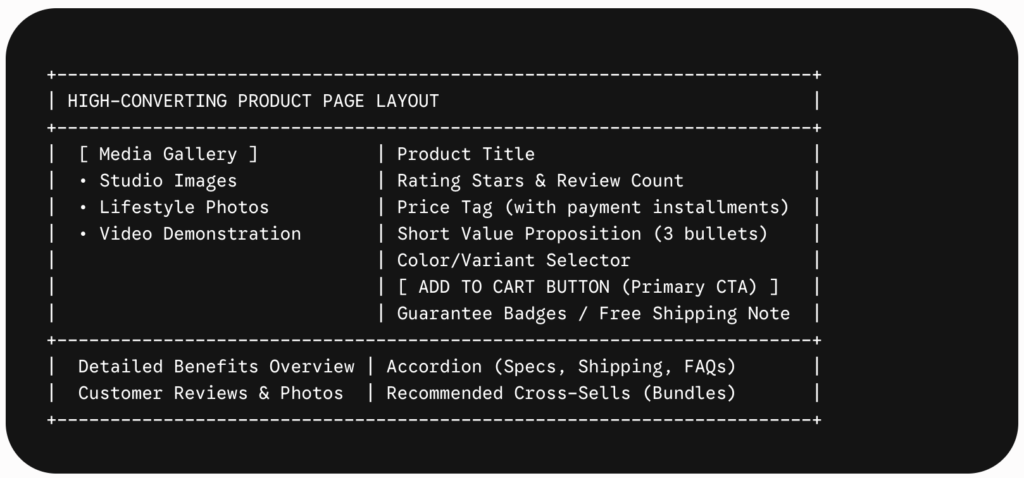
Essential Product Page Conversion Elements
- High-Resolution Media: Provide multi-angle photography, zoom options, scale references, and short lifestyle video clips.
- Benefit-Focused Copywriting: Structure product descriptions around functional customer benefits rather than generic specs.
- Clear Value Callouts: Highlight return policies, shipping times, money-back guarantees, and warranty terms directly next to the primary CTA.
- Social Proof Elements: Display star ratings, verified buyer badges, customer photo uploads, and user-generated review content.
15. Step 13: Set Up E-commerce SEO
Search Engine Optimization (SEO) creates sustainable, non-paid acquisition pipelines by capturing high-intent organic search traffic.
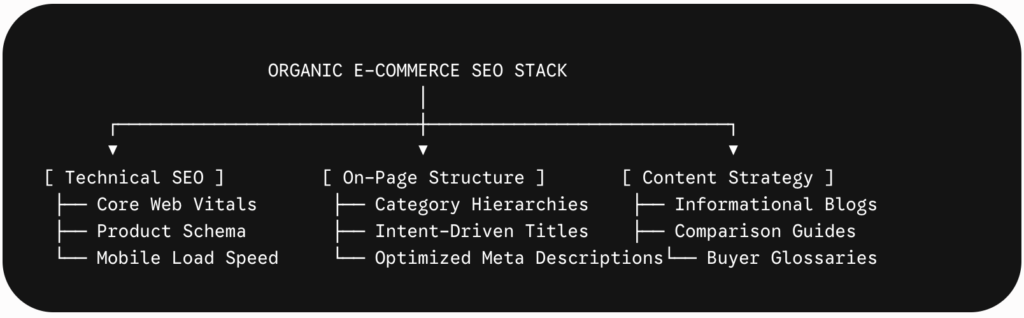
E-commerce SEO Pillars
- Category Page Optimization: Target high-volume, commercial-intent keywords (e.g., “organic skincare serum”) on category and collection pages.
- Product Page Optimization: Target long-tail transactional terms (e.g., “fragrance-free vitamin c face serum for sensitive skin”).
- Technical SEO & Core Web Vitals: Ensure fast page loading, clean URL structures, automated XML sitemaps, and mobile UX performance.
- Structured Data Implementation: Add
Product,Offer, andAggregateRatingschema markup to display price, availability, and review stars directly in search engine results.
JSON
{
“@context”: “https://schema.org/”,
“@type”: “Product”,
“name”: “Organic Vitamin C Serum”,
“image”: “https://example.com/images/serum.jpg”,
“description”: “Hydrating, fragrance-free facial serum made with organic botanical ingredients.”,
“sku”: “OVC-SERUM-01”,
“offers”: {
“@type”: “Offer”,
“priceCurrency”: “USD”,
“price”: “48.00”,
“availability”: “https://schema.org/InStock”
},
“aggregateRating”: {
“@type”: “AggregateRating”,
“ratingValue”: “4.9”,
“reviewCount”: “128”
}
}
Building an enterprise search footprint requires technical implementation and ongoing optimization. Utilizing specialized SEO services from DigitoX can help ensure proper site architecture, schema deployment, and long-term keyword growth.
16. Step 14: Build Your Content Strategy
Content marketing nurtures organic audience engagement across the entire buyer journey—from initial problem awareness to final purchasing decision.
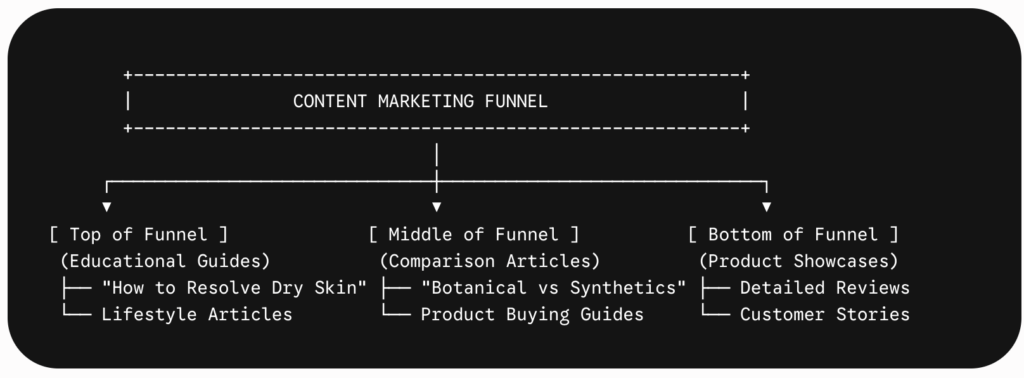
Sample 30-Day Content Framework
| Week | Content Focus | Primary Channels | Primary Goal |
| Week 1 | Educational / Industry Pain Points | Blog Article, Short-form Video (Reels/TikTok) | Build audience awareness & capture search intent. |
| Week 2 | Product Demonstrations & How-To Guides | Carousel Posts, Email Newsletter, YouTube Shorts | Explain product features & highlight benefits. |
| Week 3 | Customer Stories & Social Proof | User-Generated Content (UGC), Case Studies | Address customer doubts & build trust. |
| Week 4 | Limited-Time Offers & Multi-Item Bundles | Targeted Ad Campaigns, Direct Email Sequence | Drive store conversions & increase cart values. |
17. Step 15: Build Social Media Presence
Focusing on platforms where your ideal target audience naturally spends time is much more effective than trying to manage every channel available.
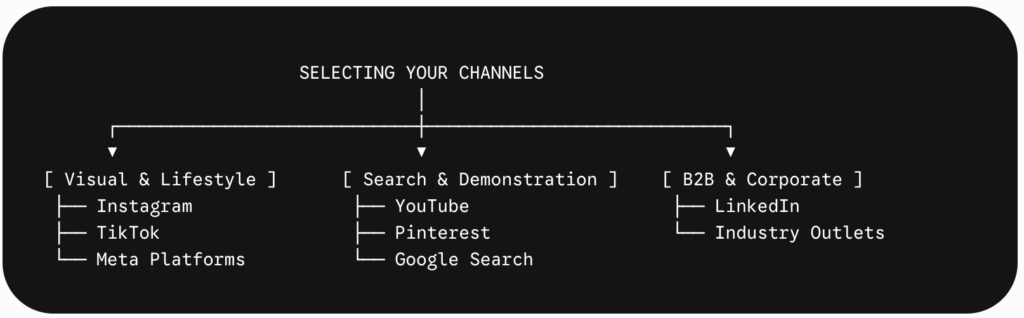
Channel Selection Guide
- Instagram & Meta Platforms: Highly effective for visual product showcases, lifestyle branding, community engagement, and retargeting ads.
- TikTok: Ideal for short-form video content, organic viral discovery, product demonstrations, and influencer collaborations.
- Pinterest: Excellent for high-intent product discovery in home decor, fashion, crafts, and lifestyle niches.
- YouTube: Essential for long-form tutorials, detailed product reviews, and persistent evergreen video search traffic.
18. Step 16: Launch Paid Advertising
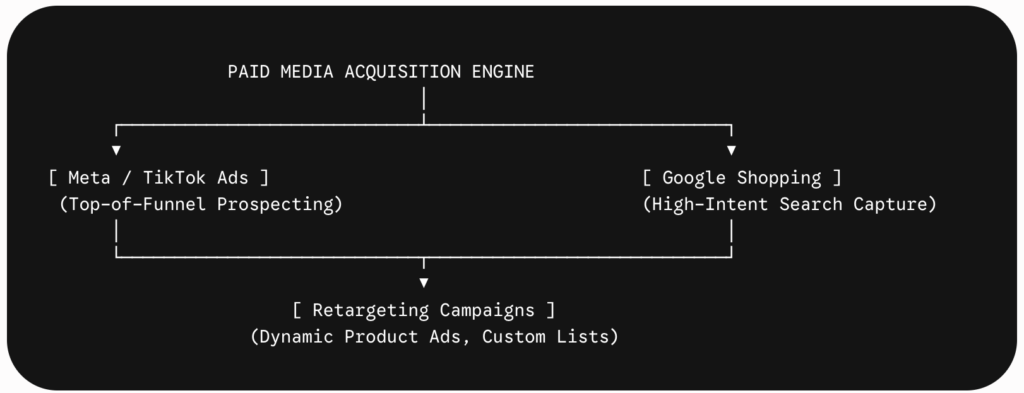
Paid media accelerates brand growth by exposing your products to qualified buyers. Validate offer conversions on a small budget before scaling up ad spend.
Primary Ad Acquisition Channels
- Meta Ads (Instagram/Facebook): Focus on dynamic prospecting using short-form video creatives, customer testimonials, and multi-product carousel formats.
- Google Search & Shopping Ads: Capture bottom-of-funnel traffic from users actively searching for your specific products or brand terms.
- Dynamic Retargeting: Serve personalized, follow-up ads to store visitors who added products to their cart but left before completing checkout.
Executing multi-channel campaigns requires continuous ad testing, creative strategy, and conversion optimization. Growing brands often rely on digital marketing services by DigitoX to scale paid campaigns while keeping acquisition costs under control.
19. Step 17: Build Email & Customer Retention
Email and SMS marketing generate high profit margins because they do not require ongoing ad spend to reach existing customers.
Core Email Workflows
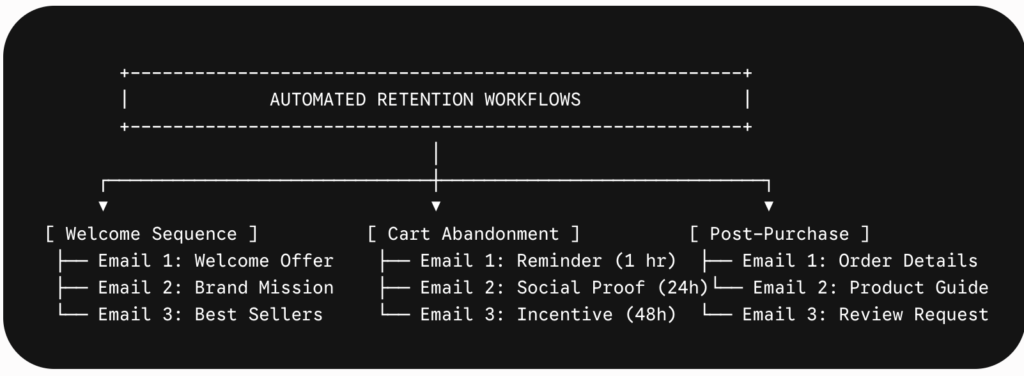
- Welcome Series (3-4 Emails): Introduce new subscribers to your brand story, highlight core product collections, and offer a first-purchase incentive.
- Abandoned Cart Sequence (3 Emails): Send automated follow-up messages at 1-hour, 24-hour, and 48-hour intervals to encourage visitors to complete their purchase.
- Post-Purchase Onboarding (2-3 Emails): Send order updates, share product usage guides, and set expectations for product delivery.
- Review & Win-Back Automations: Request customer feedback after delivery and send re-engagement offers to inactive buyers after 60-90 days.
20. Step 18: Create Social Proof
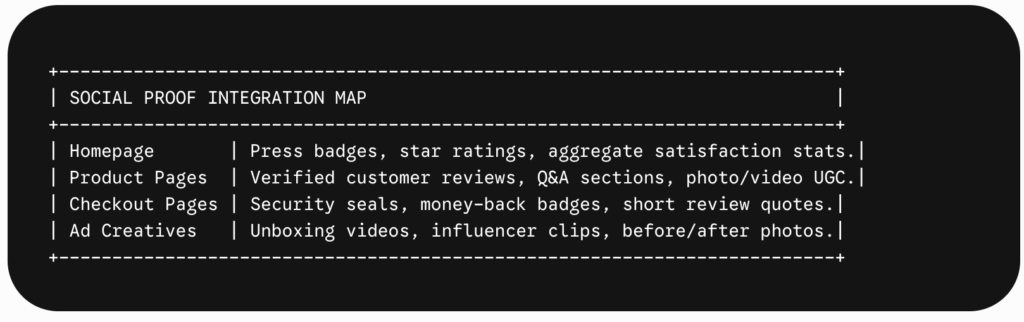
Social proof addresses pre-purchase doubts by demonstrating that real customers trust and recommend your brand.
Social Proof Best Practices
- Collect Verified Customer Reviews: Automatically request star ratings and written feedback after confirmed product deliveries.
- Encourage Visual Feedback: Offer loyalty points or future discounts to customers who submit photos or unboxing videos with their reviews.
- Highlight Authentic Experiences: Feature genuine customer reviews and unfiltered user content to build trust and credibility. Avoid fake or fabricated feedback, as it damages your brand reputation.
21. Step 19: Measure E-commerce Performance
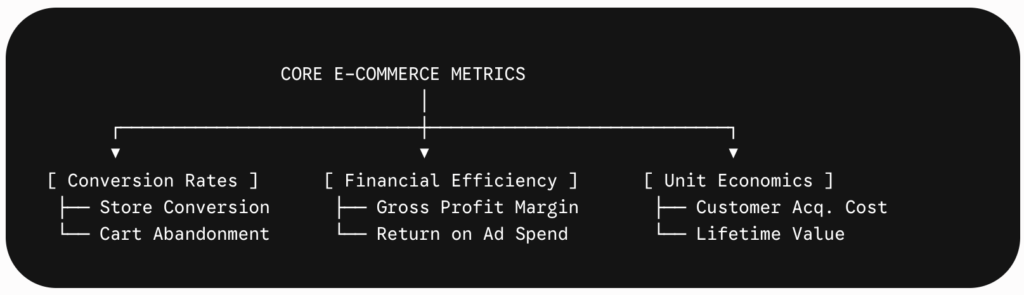
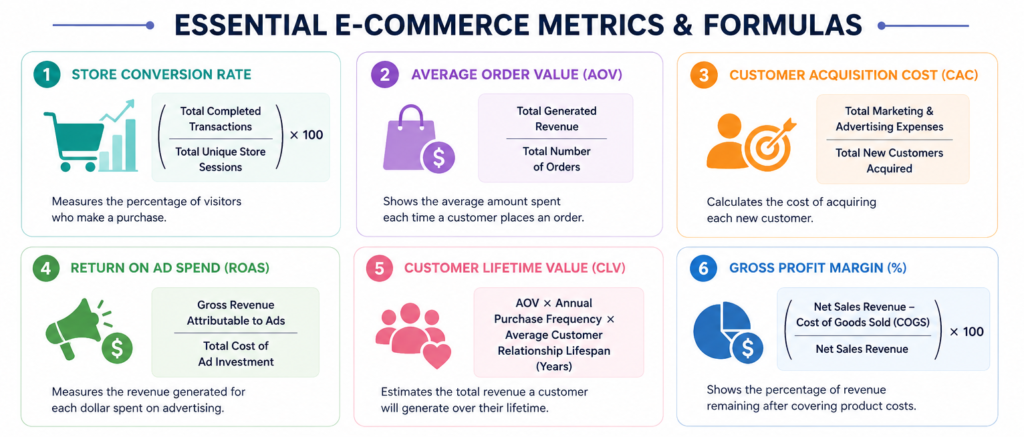
Tracking key performance metrics allows founders to optimize store operations and allocate capital effectively based on clear data.
Essential E-commerce Metrics & Formulas
22. Step 20: Scale the Brand
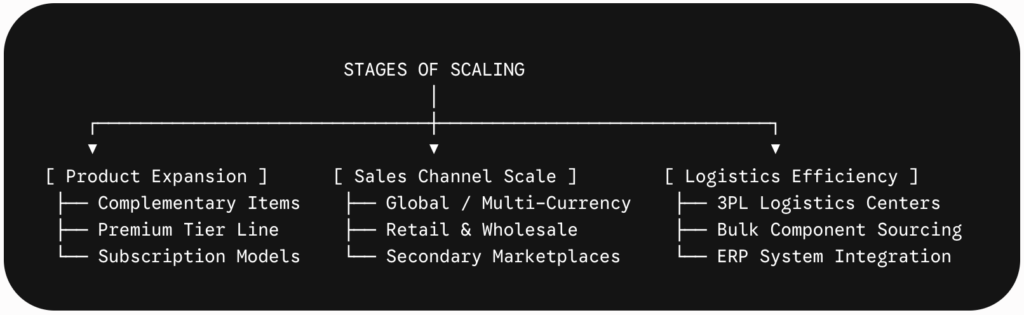
Scaling an e-commerce brand requires operational stability, efficient capital deployment, and expanding your customer base.
Growth Vectors
- Catalog Line Expansion: Introduce complementary products based on direct feedback and purchase history from your existing customer base.
- Geographic Expansion: Expand into new regions by offering localized currencies, international payment methods, and dedicated regional fulfillment hubs.
- Wholesale & B2B Distribution: Partner with select physical retail channels, specialty boutiques, or corporate buyers to open new revenue streams.
- Supply Chain Optimization: Transition to Third-Party Logistics (3PL) partners and negotiate bulk component sourcing as order volumes increase to protect profit margins.
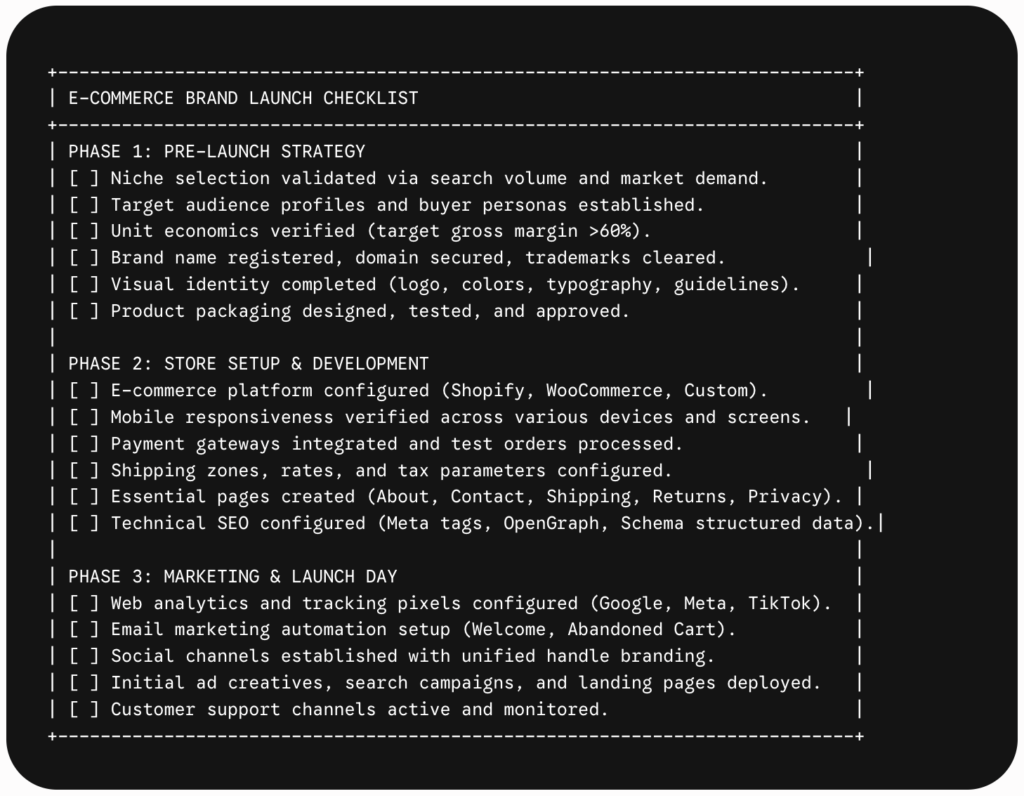
23. E-commerce Brand Launch Checklist
Use this structured checklist to ensure all technical, operational, and marketing requirements are complete before launching your brand.
24. Estimated E-commerce Brand Budget
Start-up costs vary significantly based on business model choices, inventory decisions, and development strategies. Below are realistic budget benchmarks across different launch tiers.
| Expense Category | Low-Budget Startup | Mid-Tier DTC Brand | Premium Brand Launch |
| Branding & Visual Identity | $300 – $800 | $2,000 – $5,000 | $8,000 – $20,000+ |
| Website Setup & Development | $500 – $2,000 | $4,000 – $12,000 | $20,000 – $50,000+ |
| Initial Inventory & Packaging | $1,000 – $3,000 | $5,000 – $15,000 | $25,000 – $70,000+ |
| Product Photography & Media | $200 – $600 | $1,500 – $4,000 | $6,000 – $15,000+ |
| Marketing, Ads & Launch Campaign | $500 – $1,500 | $3,000 – $8,000 | $15,000 – $40,000+ |
| Operational SaaS Tools & Legal | $200 – $500 | $1,000 – $3,000 | $4,000 – $10,000+ |
| ESTIMATED TOTAL BUDGET | $2,700 – $8,400 | $16,500 – $47,000 | $78,000 – $205,000+ |
25. Common E-commerce Branding Mistakes
Avoid these frequent mistakes that often slow down early growth and increase acquisition expenses.
- Choosing a Niche Based Solely on Trends: Entering a saturated category without long-term demand or product differentiation limits long-term viability.
- Ignoring Unit Economics: Launching products with gross margins below 50% leaves little room for advertising expenses and operational overhead.
- Overcomplicating Store Usability: Flashy visual effects that slow down page loads or create complex navigation frustrate shoppers and lower conversion rates.
- Relying Solely on Paid Ads: Depending entirely on paid acquisition channels without investing in SEO, email flows, or organic retention exposes your business to ad price fluctuations.
- Neglecting Mobile Optimization: Over 60% of online shopping orders occur on mobile devices. A sluggish mobile experience directly hurts overall conversion rates.
- Premature Scaling: Spending heavily on ad acquisition before confirming product-market fit or establishing customer retention inflates acquisition costs.
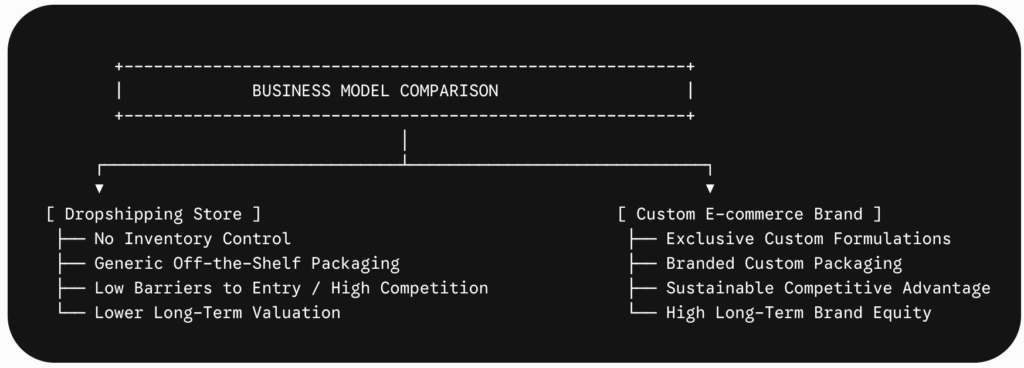
26. E-commerce Brand vs Dropshipping Store
Understanding operational trade-offs ensures aligned business investments.
| Operational Dimension | Dropshipping Store | Private-Label Business | Direct-to-Consumer (DTC) Brand |
| Product Exclusivity | None (Shared suppliers) | Medium (Generic items with custom logos) | High (Proprietary designs/formulations) |
| Initial Inventory Capital | Very Low | Moderate | Moderate to High |
| Control Over Quality | Minimal | Moderate | Complete Control |
| Profit Margin Potential | Low (10% – 20%) | Moderate (30% – 50%) | High (60% – 85%) |
| Exit Valuation Multiples | Low (1x – 2x SDE) | Moderate (2.5x – 3.5x EBITDA) | High (4x – 8x+ EBITDA) |
27. E-commerce Brand Technology Stack
A scalable tech stack streamlines operations, improves store performance, and supports business growth.
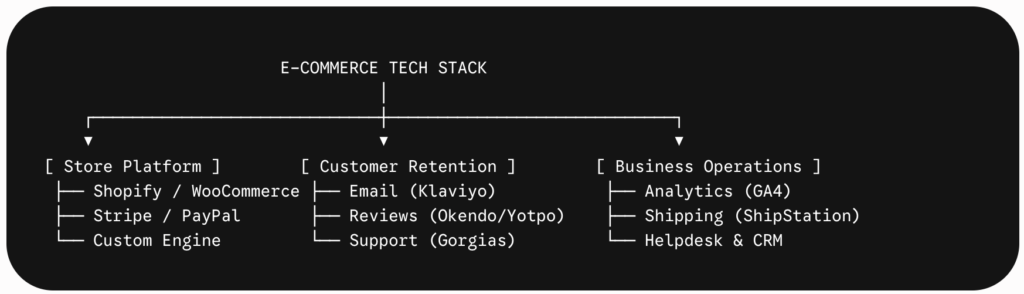
Essential Stack
- Store Engine: Shopify, WooCommerce, or Custom Architecture.
- Payment Processing: Stripe, PayPal, Apple Pay, Shop Pay.
- Email & SMS Automation: Klaviyo, Omnisend.
- Analytics Engine: Google Analytics 4 (GA4), Server-side tracking setups.
Supporting Growth Stack
- Customer Support Desk: Gorgias, Zendesk.
- Reviews & UGC Engine: Okendo, Yotpo, Judge.me.
- Subscription Management: Recharge, Skio (for recurring consumable models).
- Shipping & Logistics Automation: ShipStation, Shippo.
28. Realistic E-commerce Growth Roadmap
Building an e-commerce brand is a multi-phase process. Follow this roadmap to guide your execution step-by-step.

Stage 1: Research & Discovery
- Main Objective: Identify an underserved niche with strong market demand and viable unit economics.
- Action Items: Conduct keyword research, calculate profit margins, and complete competitor audits.
- What to Avoid: Pursuing temporary trends without long-term repeat purchase potential.
- Key Metric: Gross Profit Margin % Target (>60%).
Stage 2: Product Validation
- Main Objective: Confirm real customer purchase intent before making large capital commitments.
- Action Items: Run landing page pre-order tests, order sample batches, and gather initial feedback.
- What to Avoid: Placing large inventory orders based solely on informal feedback from friends or family.
- Key Metric: Pre-Order Conversion Rate (>2.5%).
Stage 3: Strategy & Brand Identity
- Main Objective: Establish clear market positioning, visual assets, and brand guidelines.
- Action Items: Design logo suites, select color palettes, write brand messaging, and create packaging.
- What to Avoid: Frequently changing visual elements across customer touchpoints.
- Key Metric: Brand Asset Completion Checklist (100%).
Stage 4: Infrastructure & Store Development
- Main Objective: Build a fast, secure, high-converting digital storefront.
- Action Items: Configure platform architecture, set up payment workflows, write product copy, and implement SEO schema.
- What to Avoid: Adding excessive, unoptimized third-party apps that slow down mobile page performance.
- Key Metric: Page Load Speed (<2.5s) & Core Web Vitals Pass Rate.
Stage 5: Initial Launch
- Main Objective: Successfully open the store to public shoppers and confirm system performance.
- Action Items: Send launch announcements to waitlists, deploy initial ad campaigns, and monitor store analytics.
- What to Avoid: Distributing ad spend across too many acquisition channels simultaneously.
- Key Metric: Successful Orders Processed Without Technical Errors.
Stage 6: Customer Acquisition
- Main Objective: Build consistent daily store traffic and generate steady sales volume.
- Action Items: Optimize Meta and Google ad campaigns, publish SEO-driven content, and execute email automated flows.
- What to Avoid: Scaling budget on ad creatives before confirming offer conversion rates.
- Key Metric: Customer Acquisition Cost (CAC) vs Target Threshold.
Stage 7: Optimization & Retention
- Main Objective: Maximize Average Order Value (AOV) and customer repeat purchase behavior.
- Action Items: Run A/B split tests on product pages, launch loyalty programs, and optimize post-purchase email sequences.
- What to Avoid: Relying exclusively on discounts to drive repeat purchases, which can erode profit margins.
- Key Metric: Repeat Purchase Rate (>25%) & Average Order Value (AOV).
Stage 8: Scale & Expansion
- Main Objective: Grow market share, expand product catalog lines, and access new geographical markets.
- Action Items: Launch new product categories, expand into wholesale channels, and optimize 3PL logistics operations.
- What to Avoid: Scaling sales volume faster than your inventory cash flow and fulfillment operations can support.
- Key Metric: Customer Lifetime Value to Customer Acquisition Cost Ratio ($CLV:CAC > 3:1$).
Frequently Asked Questions
Clear answers to common questions about building, launching, and growing a successful e-commerce brand.
Build a brand, not just another online store.
Building a successful e-commerce brand requires a thoughtful combination of market research, clear brand strategy, reliable website technology, scalable marketing, and ongoing customer retention. By focusing on strong unit economics, authentic audience engagement, and long-term brand building rather than quick sales tactics, you create a defensible business asset capable of sustainable growth.
The relationship with market structure was an interesting point.
TraderZO review
The practical examples make the analysis much clearer.
crypto market analysis
Finally found a platform that actually pays out on time. The variety of games is insane and the support team is super helpful. Give casinopluscomph a go, you won’t regret it!