
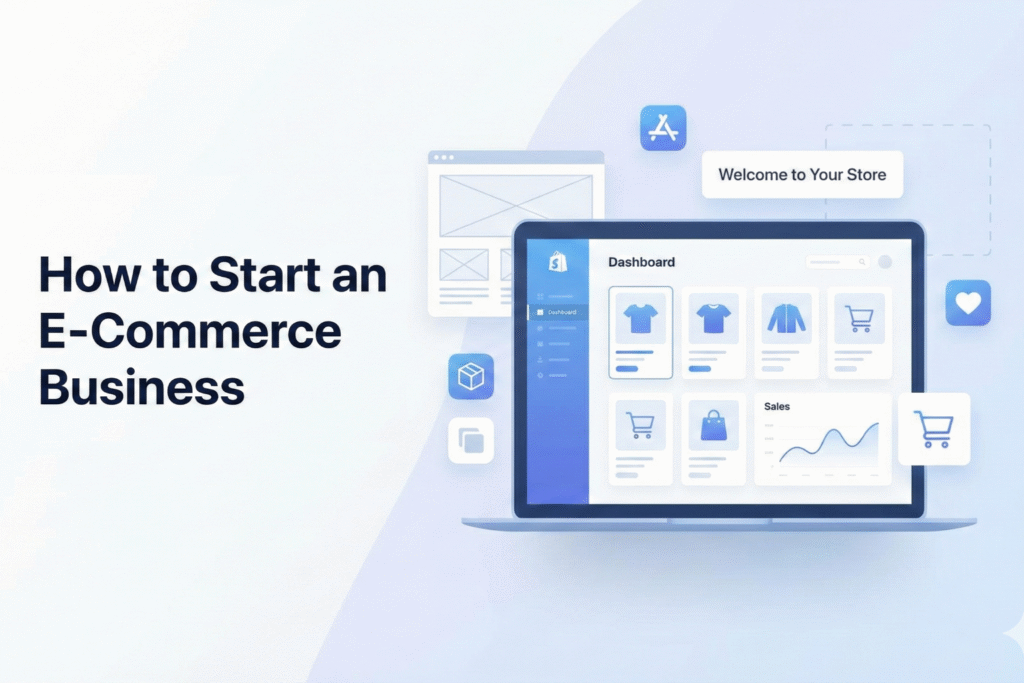
Starting an e-commerce business sounds exciting. Then reality hits — products, website, payments, marketing, logistics, customer service.
It feels like a lot because it is a lot.
This guide breaks everything into clear, beginner-friendly steps so you can launch your store with confidence.
And wherever expert support makes a real difference, you’ll see how our agency at thedigitox.com can step in and speed up your growth.
1. Start With What You Want to Sell
The strongest online stores solve a real need.
Here’s how to pick the right product niche:
-
Solve a problem people actively face
-
Aim for repeat-purchase or category variety
-
Understand competitors
-
Look for good margin opportunities
-
Build a simple USP (quality, story, design, or convenience)
A small difference in product or presentation can set your brand apart instantly.
2. Choose Your E-Commerce Business Model
Your structure decides your operations:
-
Inventory-based: you keep stock & ship
-
Dropshipping: supplier ships for you
-
Print-on-demand: best for clothing, merch, gifts
-
Marketplace seller: Flipkart, Amazon
-
D2C through website: Shopify, WooCommerce, or custom
Pick the one that matches your budget and goals.
3. Build Your Website — The Core of Your Business
Your website is your digital storefront.
A good e-commerce website should feel fast, simple, trustworthy, and conversion-ready.
A strong store usually includes:
-
High-speed pages
-
Mobile-first design
-
Clear navigation
-
Strong product pages
-
Smooth checkout
-
SEO-friendly structure
If you want your website built professionally, with UI/UX that converts and SEO-ready setup,
you can explore our services at thedigitox.com.
We build custom Shopify stores and full-stack e-commerce websites tailored for growth.
4. Register Your Business & Complete the Legal Setup
Before you go live:
-
Choose a legal structure
-
Apply for GST
-
Get a domain name
-
Create your business bank account
-
Add essential policies (Shipping, Returns, Privacy, Terms)
These steps form the backbone of a trustworthy e-commerce store.
5. Pick the Right Platform for Your Store
Each platform has its own strengths:
-
Shopify: quick, secure, beginner-friendly
-
WooCommerce: flexible with WordPress
-
Custom Development: full control for scaling brands
-
Marketplaces: extra sales channels & visibility
If you’re unsure which platform suits your business,
our experts at thedigitox.com can help you choose based on budget, category, and long-term scalability.
6. Design Optimised Product Pages
Product pages must make customers feel confident about clicking “Add to Cart.”
A winning page includes:
-
High-quality images
-
Clear benefits
-
Sizes/specifications
-
FAQs
-
Return info
-
Reviews & ratings
-
Delivery timelines
A polished product page reduces doubts and boosts conversions.
7. Set Up Reliable Logistics & Shipping
Fast, predictable delivery creates repeat customers.
You can use:
-
Shiprocket
-
Delhivery
-
Blue Dart
-
DTDC
-
XpressBees
Use prepaid + COD mix to maximise orders in the beginning.
8. Create a Marketing Strategy That Brings Actual Traffic
You can build the most beautiful website.
But without traffic? No sales.
Here’s where smart marketing steps in:
✓ Social Media Marketing
Build your brand story across Instagram, Facebook, YouTube & Pinterest.
✓ Performance Marketing
Google Ads and Meta Ads bring quick visibility with targeted audiences.
✓ SEO (Search Engine Optimisation)
Organic traffic compounds over time — blogs, content, product descriptions, backlinks.
✓ Email & WhatsApp Marketing
Automations = higher repeat orders.
If you want a complete marketing setup —
ads, SEO, content, automation, strategy —
you can check out our services at thedigitox.com.
We handle:
-
Meta & Google ads
-
Complete social media management
-
Influencer marketing
-
SEO and blog strategy
-
Creative design + content
-
E-commerce automation
9. Launch, Track & Improve Continuously
Once live, analyse:
-
Traffic
-
Add-to-cart rate
-
Checkout drop-offs
-
Best-selling products
-
Customer behaviour
-
Ad performance
Tools like Shopify Analytics, GA4, Meta Pixel, Search Console, and Hotjar help you understand what’s working.
Make small changes often. They create major growth over time.
10. Scale When You See Momentum
After your basics are stable:
-
Expand your catalogue
-
Introduce seasonal launches
-
Run influencer marketing
-
Improve packaging
-
Explore marketplaces
-
Add international shipping (if relevant)
This is where structured growth begins.
If you need guided scaling, you can always reach out to us via thedigitox.com.
Why Work With Us (TheDigitox)
At thedigitox.com, we help brands skip the guesswork and launch faster, cleaner and smarter.
We offer:
-
Custom E-Commerce Website Development
-
Shopify Store Development
-
SEO & Content Strategy
-
Social Media Management
-
Meta + Google Ads
-
Branding & Creative Direction
-
Influencer Marketing
-
Conversion Rate Optimisation
You get everything you need — design, development, marketing — under one roof.
Conclusion
Starting an e-commerce business is no longer complicated.
But scaling it the right way requires consistency, clarity, and the right team behind you.
Whether you need a website, marketing, SEO, or a full brand setup —
you can always explore our services at thedigitox.com.
Let’s build something strong, something scalable.

https://puslaxbcnto.com – Oxohulapa Akugupij guv.mduq.thedigitox.com.vip.fj https://puslaxbcnto.com